PACES MRCP UK - Where MRCPians Meet Since 2006

MRCP is well establised as an entry exam for advanced specialist training in many countries including Malaysia. It consists of 3 paper i.e. Part1, Part2(written tests) and PACES. PACES in full means Practical Assessment of Clinical Examination Skills. It is the third part and the candidate is assessed by fellows of RCP. I passed my PACES in 2005. I am glad that many seniors had guided me throughout my preparation for PACES and I wish to share my experiences with PACES candidates via this blog.


Thursday, June 14, 2007

Station 5 Quiz


Thank you for the great response for the 1st Quiz.


Here comes the quiz for Station 5.

The diagnosis is rather clear cut but how do we get 4/4 instead of 3/3 ??

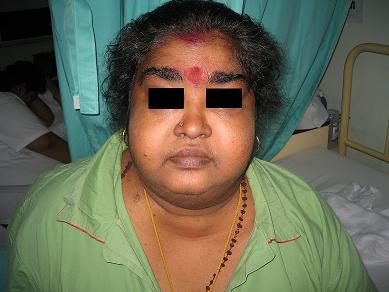
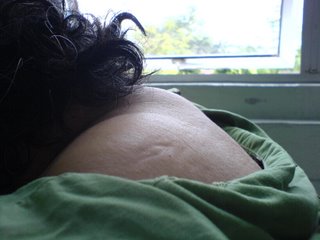
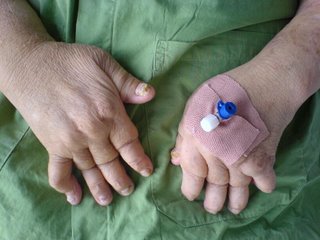
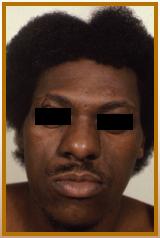
This patient has acromegaly and the disease is inactive, currently complicated by bilateral carpal tunnel syndrome and urinary tract infection
Examination of the hands reveals large spade like hand. It is however not sweaty or warm. Positive Tinel sign suggestive of bilateral carpal tunnel syndrome.
There is no proximal muscle weakness
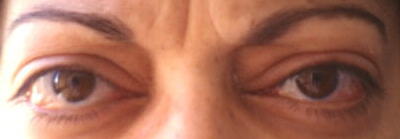
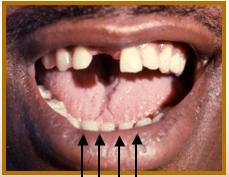
There is prominent supraorbital ridge with prognathism and large nose and large tongue. There is also interdental separation.
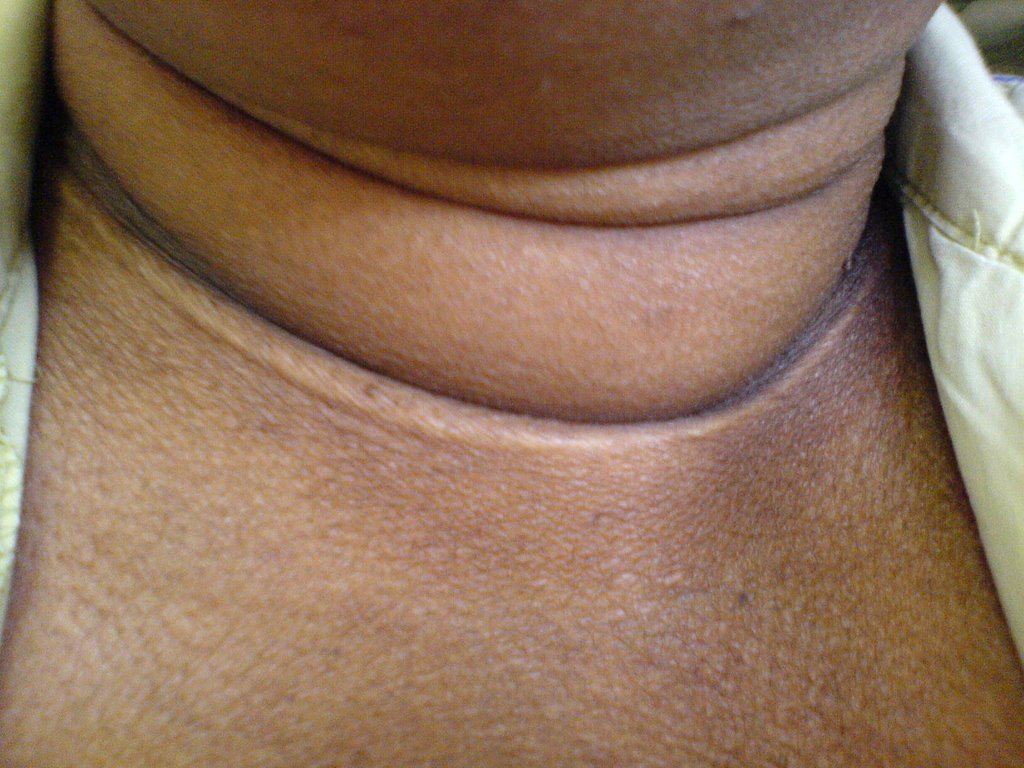
There is no visual field defect and no goiter.
There is heel pad thickening

I would also like to check the BP, urine dipstick for glycosuria, organomegaly and the old photograph of this pt.

There are several other signs which are not listed here which may need to be checked. Please identify and tell so that one can score 4/4 !


Any takers ?
Pictures and case contributed by Wuchereria.

Labels: , ,

Monday, April 30, 2007

Station 5 - Acromegaly, Uneasy To Get "4" For An Easy Diagnosis


During my singapore PACES exam, i got an acromegaly case. The stem being " please examine the patient's hands".

By one look at the patient, we are happy to conclude that the patient has acromegaly, the next thing in my mind is what the examiner want me to pick up from the patient's hands with acromegaly.

Possible things to pick up:
1) Carpal Tunnel syndrome
2) Osteoarthritis
3) Pure hand feature of acromegaly

We may easily get a 4 mark if we follow the stem, go accordingly to point out the features that support the diagnosis.
Steps to follow in order for acromegaly patient in the very moment of 2 min before we use up 3 min for presentation.
1) Hand : large spade like hand, doughy hand, sweaty palm, tinel's sign

2) armpit: especially to look for skin tag (most candidate miss it, and we may only get 3 if we miss it)

3) Face: Prominent supraorbital ridge, prognatism, widely-space teeth, macroglossia, increase in skin creases/ wrinkles

4) Visual field assessment -bitemporal hemianopia

5) Lower limb: large foot, osteoarthritis of knee, thicken heel pad

6) complete by mentioning: checking BP, urine for glycosuria, examine for galactoria

Present as such order to make it systematic but the opening sentence must be base on the stem, in this case, "examine the hand"
Eg:
This patient has features of acromegaly. I say so because she has a large doughy, spade like hand. Her palm appeared sweaty. There is evidence of carpal tunnel syndrome as the tinel sign is positive. I found a skin tag over her right axillary area. Her voice appears to be coarse, she has prominent supraorbital ridge, and prognatism. She has macroglossia with widely-space teeth. Her foot appears to be large. Her heel pad is thickened. There is sign of osteoarthritis over her knee joint. There is no evidence of bitemporal hemianopia.

In conclusion, Mdm X has acromegaly. The most likely cause is a macroadenoma. There is sign of active disease in view of presence of sweaty palm, and skin tag. I would like to further assess her cardiovascular system.

These are the questions the examiner asked from me: ( not much time left after my presentation)
1) How do you confirm the diagnosis
Answer: Failure of suppression of GH level to less than 2ng/ml after oral glucose confirm the diagnosis
2) What further test you want to do?
Answer: Localization of pituitary tumour by requesting a MRI of brain
3) What are the treatment?
optimization of cardiovascular risk by strict BP and sugar control, refer eye for Visual field perimetry, definitive treatment: transphenoidal hypophysectomy, medical: somatostatin analogue: Octreotide, GH receptor antagonist: Pegvisomant

That end the session with clear pass from both examiner.
Further possible question:
1) What other source of GH if MRI shows no macroadenoma?
Answer: ectopic growth hormone production, small cell CA lung
2) How do you monitor treatment response?
Answer: insulin like growth factor
3) Do you know of any endocrine adenoma association with acomegaly?
Answer: MEN type 1 -parathyroid hyperplasia, pituitary adenoma, pancreatic tumor
Need to examine calcium level

Labels: ,

Saturday, April 21, 2007

Pseudohypoparathyroidism


The stem

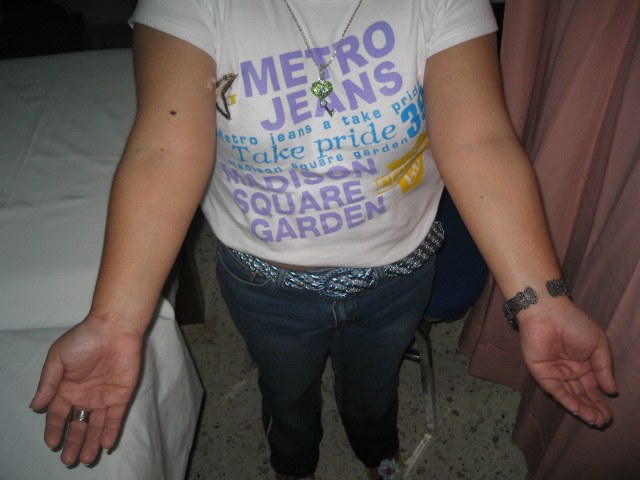
This 30year old lady was noted to be short by the polyclinic MO. Would you like to examine her?


Suggested presentation

This young woman is overweight, short, with rounded facies, missing teeth, short fingers and a short neck. She also has shortening of both fourth metacarpals.

The combination of these features suggest the diagnosis of psedohypoparathyroidism type 1a

I would like to elicit Chvostek’ and Trosseau’s sign as she may have hypocalcaemia.

Questions that may be asked

What is the basic abnormality in Type Ia patients?
Ans. There is target organ resistance to the action of parathyroid hormone. The defect occurs proximal to the formation of the second messenger , cAMP

How will you treat this patient?
Ans Acute symptomatic hypocalcaemia can be corrected with infused calcium
Gluconate with cardiac monitoring to prevent hypercalcaemia. For long term
treatment, use of calcium supplements and activated Vitamin D to keep calcium
levels within the normal range. (Activated Vit D eg calcitriol to increase
absorption of Calcium in guts and increased retention in kidneys)

What biochemical test can you do in this patient
Ans. Ellsworth Howard Test. In a normal person, infusion of parathyroid hormone will cause a rise in urinary phosptate and cAMP excretion. In Type I A patients, there is no increase in urinary cAMP or phosphate.

What are other causes of short stature you know of?
Ans Genetic for example familial, achondroplasia, Turners and Noonans and Downs syndrome
Nutritional or general illness during childhood eg low birth weight, congenital heart disease or renal disease


Contributed by Giant Eagle

Labels: ,

Wednesday, January 24, 2007

Some Drills On Station 5 (Part 2)

Stem: Look at this patient and proceed.


Suggested presentation:

I would be very much interested in knowing his blood pressure and I would complete my examination by examining the visual field and dipstick his urine for glycosuria.
(Examiner: "His blood pressure is 110/80mmHg and there is no visual field abnormalities")

This patient has acromegaly as suggested by his coarse facies and spade-like fingers. There are prominent supraorbital ridges and the nose and mouth are both relatively big with evidence of overbiting of the lower jaw. On inspection of his oral cavity, there is macroglossia with interdental separation. Tinel's sign is negative. There is no axillary skin tags and excessive sweating. Coupled with a normal blood pressure and normal visual field, I think the disease activity is currently quiscent.

NB: As demonstrated in this case, candidates should not be taken aback by information offered by the examiners midway during your presentation. Instead, you should be keen to expect responses from examiners since that information is important in formulating the complete diagnosis.

Labels: ,

Thursday, November 23, 2006

Paget's Disease


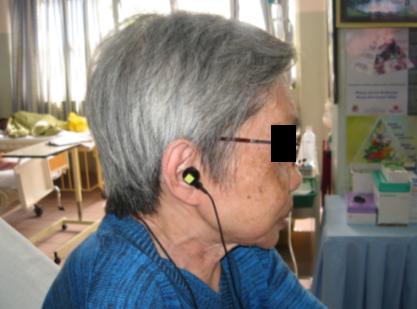
My diagnosis is that this elderly lady has Paget’s disease as evidence by enlargement of the skull, bowing of the Right tibia which is warmer than the left one. She also has a hearing aid which suggests her condition is complicated by deafness. She is kyphotic.

I would like to look at the fundus for optic atrophy and angioid streaks, examining the CVS for heart failure. I would also do a urinalysis for evidence of hematuria (urolithiasis).

Investigations include ALP, urinary hydroxyproline which are elevated and a normal Ca and PO4.

**When is biphosphonates indicated for Paget's ds?

posted by Wuchereria

Labels: ,

Sunday, September 10, 2006

Turner's Syndrome

Case record by Wucheceria

Short stature

Webbed neck and low set hairline

Wide carrying angle


Approach

Short stature

Hands
*Short 4th metacarpal
*Wide carrying angle (cubitus valgus)

Face
*Hypertelorism
*Epicanthic fold
*High arched palate

Neck
*Webbed neck
*Low hairline

Chest
*ASD scar
*Shield like chest
*Wide spaced nipple

Lymphoedema
Mental retardation is rare
Left sided heart lesions i.e. aortic stenosis , coarctation of aorta

Questions:
What renal abnormalities are associated with Turner’s
Horseshoe kidney and hydronephrosis

Is pregnancy possible ?
Yes in the mosaic individuals with normal 46 XX cell line

How would you manage such patients ?
Tretment is supportive and includes hormone replacement therapy on attaining puberty, primarily to prevent osteoporosis and induce sexual maturation or menses

Differential diagnosis
Noonan’s syndrome

Labels: ,

Thursday, August 24, 2006

Cushing's Syndrome


I would be keen to examine this lady's blood pressure and dipstick the urine for evidence of overt glycosuria and proteinuria. I also would like to complete my examination by checking the visual fields and performing a funduscopy to look for evidence of retinopathy and papilloedema. A history of steroid usage is of prudent importance in this patient.
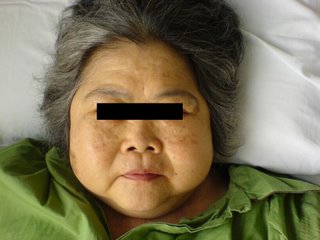
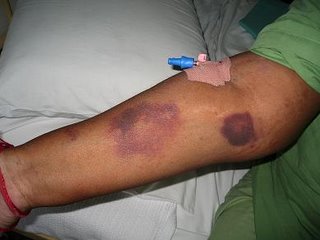
This lady has Cushing's syndrome as evidenced by the presence of moon-face associated with hirsutism and acne. There are buffalo hump and truncal obesity as well. There is thinning of the skin with localised bruises especially over the cubital fossae of both arms. However there is no purplish striae noted on the abdomen and inner thighs. There is no oral thrush. Patient has proximal weakness. The back is straight with no features of kyphoscoliosis.

Questions:
1. What are the causes of Cushing's syndrome?
Outline: Pituitary-driven, adrenal and ectopic or iatrogenic sources.

2. How would you investigate to determine the cause?
I would screen the patient by doing a 24hr urinary free cortisol first and overnight dexamethasone suppression test. A high dose dexamethasone suppression test is then needed to localise the source of excess cortisol. An elevated ACTH level would isolate the source to either from pituitary or ectopic source.

3. What are the other tests to determine the source of ACTH (to distinguish primary from ectopic)?
CRH and inferior petrosal sinus sampling. An MR of the pituitary gland is helpful as well.

4. How would you manage Cushing's syndrome?
Outline: If possible, the underlying source of excess cortisol should be removed. In cases where the source cannot be removed, I would manage the complications which may arise from Cushing's syndrome.

5. What is Nelson's syndrome?
(A reminder: In real exam situation, you are unlikely to get so far. If you do, then there are 2 extreme possibilities, ie, either you score tremendously..or you failed badly!)
The bell has already rang! The answer is in the book :)

Labels: ,

Friday, June 23, 2006

Spot diagnosis: Acromegaly


Widely spaced teeth

Acromegaly is a gift in endocrine substation. You should not miss the striking features of acromegaly.
**Face-prominent supraorbital ridges,large nose and tongue, increased interdental separation, prognatism.

Then, proceed to look for:
1) Neck for goiter
2) Visual field for bitemporal hemianopia
3) Hand- carpal tunnel syndrome, spade-like hand, thick , doughy hand with thick hand and sweaty palms
4) Skin- look for skin tag over the axilla.
5) Leg- leg odema ( may indicate heart failure)

Lastly, tell examiners that, you would
1) check abdomen for hepato-splenomegaly and look for testicular atrophy
2) Check BP and urine for sugar
3) Check joint for athropathy
4) Ask for patient's old photo or IC for comparison with current facies features

Tips: As a MRCPian, you are expected to assess the disease activity. Please pay attention to check for sweaty palm, skin tags, visual field and BP.

Labels: ,

Thursday, June 15, 2006

Spot diagnosis: Cushing's syndrome


Cushing's syndrome is another popular spot diagnoses in PACES. The candidate is usually asked to "Look at the patient's face".

There are 3 main steps in dealing with this case:

First, be able to recognise all the striking features of Cushing's syndrome.
** Typical moon-face with plethora, hirsutism and acne.
** Truncal obesity with interscapular and supraclavicular fad pads.
** Purple striae over the abdomen, around the shoulders and breasts and thighs.
** Thin skin and easy brusing commonly found over limbs
** Proximal myopathy (shoulders & hips) and spinal tenderness (osteoporosis)

Then, you must always look out for the possible underlying diagnosis as it is not enough for a PACES candidate to get the diagnosis of Cushing’s syndrome only in MRCP.

Lastly, please complete your examination by mentioning that you would like to measure the BP and test the urine for sugar.

Points to remember: The commonest cause is still iatrogenic i.e. secondary to steroid. So, please look for RA hands, gouty arthritis, nephrotic syndrome and etc.

RA hands

What is the other cause for Cushing's syndrome?

Labels: ,

Friday, June 02, 2006

Lady with hoarse voice

Thickened and coarse facial features, perorbital puffiness

A spot diagnosis in endocrine substation in station 5.

General inspection
** Hoarse voice, response and movements are slow
** Overweight
** Myxoedematous facies as shown in the picture

Check eye for jaundice(?chronic active hepatitis)and pallor (?hemolytic anemia). Don't forget to look for Grave's disease eye signs.

Rub the hair with your fingers to feel for coarse hair.

Check the mouth for macroglossia.

Check the neck for goitre and scar
Don't miss a scar in this case! In PACES, 99.9% of hypothroidism is due to previous total thyroidectomy.

Thyroidectomy scar!

Then, proceed to the hand to count the pulse rate i.e. bradycardia and look for acropachy in Grave's ds.

Test for proximal myopathy over shoulder.

Check for pretibial myxoedema and pedal edema in lower limbs.

Lastly, position the patient in a chair to test the ankle jerk for slow relaxation phase. Remember, this is the most important sign that indicate the patient is clinically hypothyroid!

End your examination by saying that you would complete it by checking CVS, Lung and cerebellar signs.

Learning points:
** Don't miss a scar in hypothyroid patient!
** Always look for Grave's ds signs in hypothroid patient. Remember, the treatment may cause hypothroidism!

Labels: ,

Thursday, February 02, 2006

"Grave's disease"


PACES candidates should know everything about Grave's disease on their fingertips. It is very common. In fact, I got it twice for PACES exam and there was always a drink beside of the patient!

Usual themes:
1. Please examine this lady who presented with palpitation for 2/52
2. This lady presented with neck swelling. Please examine.
3. Please examine this patient's thyroid status.

My advice is to divide the examination into two objectives.
First, assess the thyroid status and signs to support Grave's disease. Second, examine the neck for diffuse goitre. The sequence of examination would depends on the theme given. For theme no. 1 & 3, I would examine the thyroid status then proceed with neck examination.

Thyroid status would include:
1. Hands: pulse, sweaty palms, tremor
2. Arms: proximal myopathy, hyperreflexia
3. Eyes: lig lag, lid retraction

Points that support Grave's disease would include:
1. Diffuse goitre
2. Thyroid acropachy, onycholysis, palmar erythema
3. Exophthalmos, chemosis, ophthalmoplegia
4. Pretibial myxoedema

Labels: ,